

by Patty Harrison
Editor-in-Chief, AdChat DFW
The advertising industry has never been still. It reinvents itself through every disruption whether it be the fall of film, the rise of digital, the shift to the cloud, and now the rapid acceleration of artificial intelligence. But the recent Omnicom/IPG merger, as outlined in this Ad Age coverage that sparked this outreach, represents something more than a structural shift. It marks the end of several of the most iconic agency brands in our business and raises real questions about culture, identity, and the future of the holding company model.
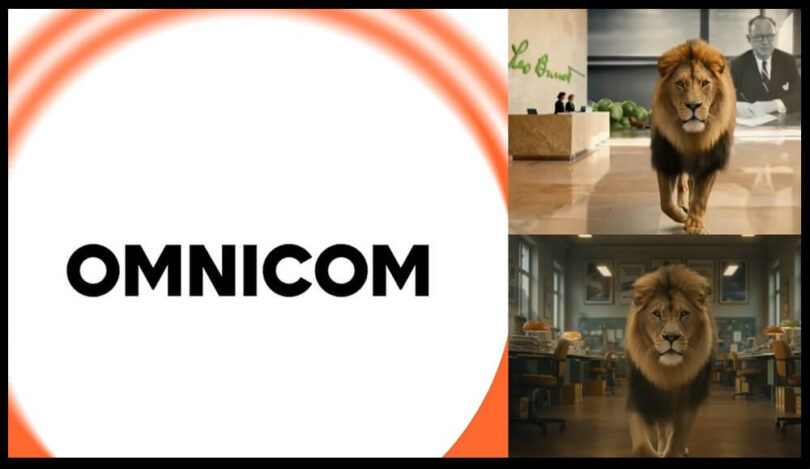
Also last week, Publicis Groupe released a stunning 100-year anniversary video, composed of roughly 25% live action and 75% AI-generated imagery, demonstrating just how radically creative production is evolving. Whether thrilling, unsettling, or both, it showcased a watershed moment in AI-powered storytelling and signaled that change is no longer on the horizon, it has arrived.
Referencing the merger article and the Publicis video, I reached out to advertising, production, and creative leaders in DFW to gather their perspectives, as I believe the rise of AI is inextricably linked to the merger, an event that will inevitably impact Dallas–Fort Worth, from talent movement and client expectations to agency models and production workflows.
The responses are candid, human, and deeply insightful, and paint a vivid portrait of an industry in transition. They are in no particular order.
On the Merger
John Kiker, President, Medium Giant
“There’s a lot of forward-looking guesswork happening with the holdcos trying to strike the balance between the expected lift and efficiencies AI will bring and the need for human-centered craft, thought leadership, stewardship, and engineering. Cuts may be too deep or misplaced. I see some level of correction in the next 12 months.”
Matt Powell, President, Moroch
“There has always been consolidation and evolution with holding companies, but this merger feels different. It’s leading with shareholders in mind, not its clients or its employees.”
Joseph Alexander, CEO, The Uptown Agency
“What stood out to me is how much attention we put on agency logos and history, and how little clients actually care about that. Inside the industry, we feel the loss of names like DDB and FCB. For clients, the questions are much simpler:
– How fast did you get to market?
– How much did it cost?
– Did it grow the business?
Whether the work came from a holding company, an independent, an in-house team, or an AI tool matters less than those three things.”
Dave Kroencke, COO, Plot Twist Creativity
“I think the merger will accelerate the trend of clients considering independent agencies even more. The details of the merger brings to light how much they are paying for administrative overhead and then make them question how much brainpower is being let go as part of the cutbacks.”
Shon Rathbone, Founder, Creative Chairman and CEO, 3Headed Monster
“The consolidation news is bittersweet and very personal for me. As the founder of an independent agency, I am, of course, encouraged to see the business landscape shift further in our favor. But I spent many formative years at FCB Chicago. I’m deeply thankful for everything I learned there and am heartbroken to see it go.”
Brian Linder, Creative Director, It’s Linder
“Storied agencies dissolving in the wash of a massive merger is certainly noteworthy, but there was something else in the article that was unsettling. Hearing the ‘industry leaders’ express concern for their agency employees exclusively in terms of ‘churn’ made me a little sick. There was no word on how this Omnicom move is good for employees. No word on why Omnicom would be a great place to work and grow your career. No word on creating opportunities for the next generation.
Reading the article, I don’t know why anyone would want to work for Omnicom when it’s clear they won’t really care about you. It used to be the big agencies were a great place for a stable career. These days, if someone wants stability, they should find a way to do their own thing.”
Kristina Blake, Partner, Creative Director, 31,000 FT
“I spent years at big New York agencies in the 90s and early 2000s, McCann, Ogilvy, DMB&B, and Publicis, where holding companies were continually buying and consolidating agencies. That was an exciting time when clients wanted big names (big egos!) and the cachet of a major agency working on their business.
I think we are in a very different place now. Today, clients are demanding agencies that are button-tight and built for speed. Agencies who know how to optimize every dollar in the budget and every second on the screen. This behemoth of a merger is the exact opposite of that. It’s more bloat, more bureaucracy, more inefficiencies. Clients don’t know who will be working on their business tomorrow.
Independent agencies are the hot hand now. Clients get passionate creatives who are responsive to their business and eager to create with new tools, along with stronger, more personal relationships with their team. It leads to more collaborative partnerships, fresher work, and ultimately winning results. I feel for the agency folks involved in this merger — I’ve been in their shoes. It’s unwieldy and uncertain. The independent side is much more rewarding and a heckuva lot more fun!”
Steve Smith, CEO, Firehouse
“Agencies are collections of individuals. As such, they have unique demeanors and perspectives. In many cases, clients have gone through a painstaking process to choose to work with them. Agencies are not interchangeable commodities, and treating them as such will no doubt result in some client attrition.
I hope that attrition is good for our business. That the talent either cut loose by or simply disillusioned by these mergers goes on to do amazing work and to raise the bar on what can be expected from independents. While it will mean more competition for agencies like ourselves, I’d like to believe it could signal a golden age for independent creative agencies.”
Charlie Calise, Chairman, Imaginuity
“Within the agency ecosystem, the Omnicom/IPG changes feel seismic. Outside of it, clients are focused on outcomes, not org charts.
In a market defined by margin pressure and performance expectations, scale and integration matter more than legacy. Consolidation may be uncomfortable, but it’s the cost of competing today.”
John Lods, CEO, Arm Candy
“From the perspective of a CEO at a growing independent, not taking into account the layoffs and the people negatively impacted, the IPG/Omnicom merger is simply the greatest Christmas present you could ever ask for and one that will keep on giving.
Every independent will have greater access to incredible talent and meaningful new client opportunities because of this deal. It broadcasted for all to see every key negative narrative there is to highlight about the holding company experience and re-acknowledged what makes indies so special.
Yes, AI is here and there are wonderful efficiencies to be gained — but advertising today, tomorrow, and into the future is a relationship-led business. Taking care of your people, taking care of your clients, and building a strong, lasting culture will always deliver better results than any merger.”
Aldo Quevedo, CEO & Creative Chairman, BeautifulBeast
“What stands out is the speed and scale. When three iconic creative networks can be sunset overnight, it’s a reminder that in holding-company land, brands are portfolios and agencies are structures to optimize.
The blind spot is assuming clients will calmly accept disruption as an internal housekeeping exercise. CMOs hire teams, not logos. Churn plus layoffs create a trust gap that no ‘client success leader’ title can fully cover.
Another thing that stands out: how quickly the new entity is reducing staff just before the holidays… that’s devastating.”
Flor Leibaschoff, Co-Founder, Chief Creative Officer, BeautifulBeast
“Mergers are always complicated, and we rarely know the real story behind them. Yes, it feels like the end of an era, but endings also clear space for stronger beginnings.
Clients today value agility and excellence without the overhead and political drag of traditional networks. This shift opens the door for new agencies to win big — big clients, big work, without old-world bureaucracy. I believe that agencies like BeautifulBeast, and others led by people who came from the big networks, are reshaping the perception of what independent shops can be. We know how to play in the big leagues. We understand the importance of investing in tools, talent, and processes. Yet, we also get to be nimble, without the layers of bureaucracy
Small agencies are growing fast, and this merger may accelerate that growth.”
Chris Salters, Founder, Lead Editor, Sawtooth Productions
“I don’t think consolidation in the creative field is a good thing. Look at film and TV — with major networks being cannibalized by larger entities, we continue to fall into a place where breakout shows aren’t as common even though there’s an abundance of content.
Within the ad world, I see the same thing. As a client, do you want to be another account on a ledger, or do you want a bespoke approach? It depends on the brand.”
Ivonne Kinser, CMO, McGraw Law Group; Founder/CEO, Vantage Creative Group
“This happened because the big agency model hit a structural limit. The industry has been running on a legacy architecture built for a slower market. Evolution is inevitable. Compassion is a choice. And to the leaders conducting the layoffs, you’re disappointing an entire industry. You can do better than this.”
Francisco Cardenas, Principal, Digital Strategy & Integration, LERMA/
“We’ve seen consolidation before — Bcom3 comes to mind — but this moment feels fundamentally different. This time, the cost is identity. These legendary agencies spent decades crafting cultures so distinct you could feel them the second you stepped inside. The swagger of DDB. The creative mythology of Leo Burnett. The storytelling heritage of Saatchi. These weren’t just agency names — they were creative ecosystems.
Now we’re asked to believe all of that can be absorbed into a single Omnicom-branded structure. But here’s the uncomfortable question: What does Omnicom stand for creatively? What is its cultural fingerprint? If the holding company can’t articulate its own ethos, how can it inherit the ethos of dozens of agencies that once defined brand?”
Francisco disclosed he used AI approved and edited by him, for this response. He also had previously written an article on his Medium blog about P&G consolidating their brands under one label. Check it out too!
Bill Milkereit, Founder/Writer, Poke The Bear
“We feel awful for those talented ad people who suddenly found themselves victims of big, shortsighted accounting firms.
This industry will always have its ebbs and flows of mergers, tech breakthroughs, and new trends. But the truly creative agencies that will not just survive, but thrive, are the ones refusing to play it safe and constantly pushing the boundaries of what brands can stand for. Indie agencies were built for moments like this.
Our Poke The Bear clients don’t want a scaled-up, watered-down creative product. They don’t want a cast of 100 semi-experienced strangers punching the clock on their account. They want a dedicated, seasoned strike force who knows their business, has their back, and understands what works, what doesn’t, and how to bring a brand to life through human creativity.”
On AI & The Future of Creativity
Chris Smith, CCO, Plot Twist Creativity
“Just like any new technology, we need to understand how to best apply it to our work. Ultimately, original ideas are what we get paid for and, so far, AI can inspire that but is not as good at creating it. But that’s changing every day, so stay tuned. But if AI can help us bring our ideas to life, or help us illustrate them better to a client and, yes, produce them in some form or fashion, we have to embrace it. The choice is between jumping onto the train and getting rolled over by it.”
Brian Linder
“I heard a quote, and I agree with it: ‘AI won’t take your job. People who are good at using AI will take your job.’ AI in the hands of a brand strategist with 15 years of experience will be far more powerful than AI in the hands of someone without that experience.
Agency art directors and writers have always been the arbiters of creative vision and discernment. A strong vision and the ability to distinguish between good and great work are more important than ever with AI.
When it comes to nurturing person-to-person relationships, humans are still the killer app.”
Shon Rathbone
“I’ve been doing this long enough to know that when a wave of technology-driven change hits our industry, don’t panic. Learn to surf.
We were early adopters of AI and because we are so very aware of what it can and can’t do well, it doesn’t scare me as much as it does some people.”
Stewart Cohen, Director/DP/Photographer, SC Pictures
“AI is here, and the quicker we embrace what it can do for us, the better. Everything is changing except the fact that our businesses are built on personal relationships.
There will be significant disruptions in how we conduct business. Who knows if it will be an easy transition? We are pushing the envelope in the ways we’re trying to harness the new technology.
I am maintaining an upbeat outlook and keeping an eye on new approaches to everything I do.”
Steve Smith, CEO, Firehouse
“AI is no doubt transformative for our business. But, it is just the latest in a string of transformative technological advances that the industry has ingested. And, as with all of them, the agencies that purpose them best – whether to differentiate their offering or become more operationally efficient – will be at an advantage. AI, however, will never replace the need for human creativity and human judgement. While AI is an incredibly powerful tool, it runs to the middle; in other words, it generates based on what has been done before. Creativity, in contrast, is about original ideas, and at least for now, that’s something humans do best.”
Kristina Blake
“In advertising, ideas are king, and they always will be. AI is just another — yet incredible — tool to help bring those ideas to life, much like computers radically changed the game in the late 80s and early 90s.
The human spark of imagination has to power the prompt. AI must still be backed by real intelligence to get the best from it. These AI-powered tools are transforming the creative and production process, but they will inspire new jobs and new opportunities. Let’s embrace them and see what greatness comes from it.”
Michael Thill, VP of Client Development, Basis Technologies
“Agency business is a people business, and while technology such as automation and AI can help augment and strengthen an agency, it is not a complete replacement. Technology can be a great way to remove manual, inefficient friction and to empower people with more capabilities. But it can’t replace qualities such as human insight, empathy, or curiosity.”
Charlie Calise
“AI-driven, product-based tools are reshaping the agency world. Agencies that aren’t fully immersed today won’t catch up tomorrow. However, in the near term, AI still depends on human intelligence to aim it, challenge it, and push it past mediocrity.”
Aldo Quevedo
“Yes, AI will absolutely accelerate a new industry order. It rewards simpler operating models, tighter tech stacks, and faster decision loops. But AI won’t just consolidate power upward, it compresses advantage downward. Independents can use the same tools to move faster and deliver better value without bureaucracy.
AI can generate volume, but it can’t earn trust, navigate politics, or make the hard calls when the brief is ambiguous. Human creativity is taste and judgment; relationships are the glue that keeps work stable when everything else is in motion.”
Flor Leibaschoff
“AI is a powerful collaborator. We need to stop wrestling with it and start working with it. It’s not leaving; we either evolve or fossilize.
What excites me is the explosion of creative possibility, ideas that were once impossible are suddenly within reach. But we have to skill up. I’m still searching for art directors who can prompt like masters and push the tool to its limits.
Humans still corner the market on emotion, intuition, and connection.”
Chris Salters
“The Publicis ad is impressive, and in another year, the tech behind it will be even more so. But what’s not discussed is the amount of traditional copywriting, editing, sound design, and compositing still required. Good AI filmmaking is not an easy one-button solution.
It still requires a production and post-production team, just with a different set of skills.”
Ivonne Kinser
“As long as we ensure machines don’t become the sole audience and sole authors, machines talking only to machines, we will be fine. The real risk is that as AI systems begin communicating with each other, humans could be pushed to the sidelines. Not eliminated, but unheard.”
Francisco Cardenas
“I’m not afraid of technology that helps humans speak more powerfully. I’m concerned about technology that starts speaking without us.
As long as humans remain the audience and the authors, we’re fine. But if AI systems begin triggering decisions autonomously, humans risk being pushed to the margins.”
John Kiker
“Breakthrough creativity and strategy lie in connecting seemingly unconnected dots. Machines can help identify anomalies and surface opportunities, but there’s no substitute for human intuition.
Machines can’t read a room. They can’t pivot in real-time. They can’t build trust. Humans aren’t going anywhere.”
Matt Powell
“AI shouldn’t be viewed strictly as an efficiency play. It’s an opportunity to elevate the quality of the work, the speed at which we move, and yes, to be more efficient, but all three matter.”
Joseph Alexander
“The Publicis film proves the point. AI can help almost anyone make something that looks good. The real difference is who has the taste and judgment to choose the idea that actually matters to people.”
Keith James, Partner, Senior Editor, Republic
“I’ve been looking at the changes in our industry through the same lens we’ve used to integrate AI into our business. The technology has become remarkably advanced but still depends on human craft to shape, push, and decide when it’s appropriate to be creatively flexible. If you look back at previous periods of disruption, the creatives and agencies that adapt well are the ones who evolve while still keeping a human perspective at the center of their messaging. That remains just as essential today, especially as both the tools and the holding companies grow more powerful.”
Mike Sullivan, CEO, The LOOMIS Agency
“AI is accelerating this shift. It’s a seismic change, far more significant than the transition to digital. It’s forcing all of us to rethink how we create, produce, and deliver value. But even as AI transforms the work, it still relies on human judgment. Losing sight of that would be a mistake.
What won’t change is the need for real human-to-human connection. Clients need smart people they trust to help them navigate confusing terrain and make sense of what’s coming next. For agencies, culture remains the most important thing you can build. Technology can amplify great work, but it can’t replace the relationships and trust that make it possible.”
Bill Milkereit
“AI is absolutely accelerating a leaner industry, but it won’t replace the parts of this business that are most valuable: human insight, client trust, and the courage to not quickly regurgitate patterns but to obliterate them.
The blind spot is thinking scale automatically creates better work. What we’re already seeing in DFW is the opposite, daring brands still want proven senior talent, not bureaucracy.”
Closing Thoughts
Thanks to everyone who participated in this piece, we are all so busy in our jobs, yet you made the time and I am forever grateful.
Across DFW, leaders overwhelmingly agree: AI is reshaping the industry, but humans remain at the center of it. While AI signals disruption, it also sparks a creative renaissance.
The recent merger signals instability at the top, but it also opens tremendous opportunities for independent agencies.
I’m proud to be an alumna of DDB, a place where I worked on iconic campaigns and learned from some of the most brilliant creatives in the industry. Those years helped define who I am today. DDB represented big ideas that shaped modern advertising. That’s why it truly hurts to see the name fade away.
If history has taught us anything, it’s that advertising evolves, disruptions happen, and lives are affected. Yet, like the Publicis lion, the industry, and the indomitable spirit of human creativity, endures. That is what will drive the next era of evolution, not learning how to prompt AI. I firmly believe that AI will create more jobs than it takes, will unlock different career paths, and amply reward those who embrace it.
As for the merger, and to give everyone a bit of perspective on advertising history, here’s a list of ad agency mergers and acquisitions over the last century.
The lion never dies.
1926 — Publicis founded (Marcel Bleustein-Blanchet).
1948 — Ogilvy (David Ogilvy) founded.
1961 — Interpublic Group (IPG) established as a holding company (McCann as core).
1971 — Wire & Plastic Products plc founded (later becomes WPP).
1986 — Omnicom created in the “big-bang” merger of BBDO, Doyle Dane Bernbach and Needham Harper Worldwide (Omnicom’s formation).
1987 — WPP (under Sir Martin Sorrell) begins major roll-up activity; WPP acquires J. Walter Thompson (JWT) (late-1980s acquisitions).
1989 — WPP completes major takeover of Ogilvy Group (one of WPP’s landmark deals in the late 1980s).
2001 — Interpublic (IPG) completes acquisition of True North Communications (adds FCB/FCB Worldwide) — major consolidation event for IPG.
2013 — Dentsu completes acquisition of Aegis Group; Dentsu Aegis Network created (global expansion).
2015— Publicis acquires Sapient (deal announced Nov 3, 2014; closed early 2015) to form Publicis Sapient.
2024–2025 — Omnicom announces acquisition of Interpublic Group
AI was used in this article to correct grammatical errors, and sharpen the ideas. It was edited and approved by me. I couldn’t have turned this around so quickly without it.