


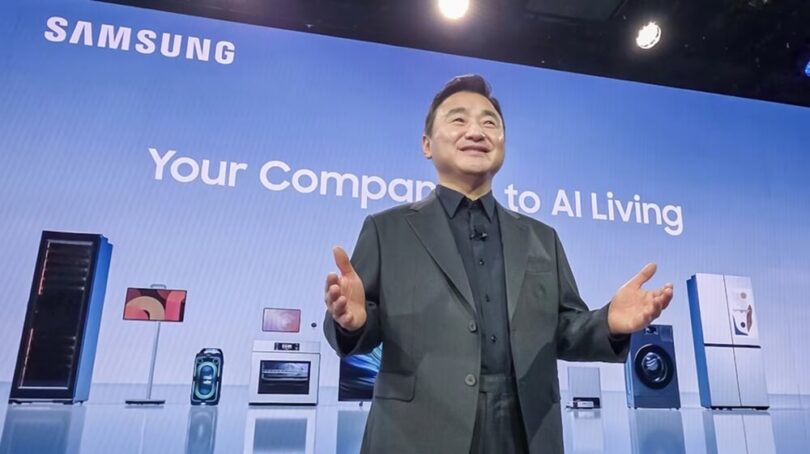

Photo Credits: TM Roh, CEO and president for Samsung’s Device eXperience Division, unveils AI-powered device and appliance upgrades at CES 2026. (Samsung)
Source: ChatGPT Used
At CES 2026, Samsung wasn’t just introducing smarter appliances—it was redefining how consumers are meant to feel about them.
From refrigerators that analyze eating habits to robotic vacuums that double as pet monitors, the South Korean tech giant used the CES stage to position AI not as a feature set, but as a lifestyle upgrade. The company’s vision reframes appliances as a “companion to AI living,” signaling a strategic shift from utility-driven messaging to emotional, relationship-based branding.
That distinction matters. In a market where price sensitivity is rising and unit sales are largely flat, Samsung is betting that consumers will pay a premium for technology that promises less friction, more personalization, and a sense of everyday care.
Selling AI Comfort in a Cost-Conscious Market
Samsung’s CES presentation—held in a packed Wynn Las Vegas ballroom filled with global media and industry insiders—arrived amid mounting economic pressure. While innovation continues to accelerate, marketers face the harder task of convincing consumers that AI-powered upgrades justify higher price points.
According to the Consumer Technology Association (CTA), U.S. spending on software and services is expected to grow 4.2% in 2026 to nearly $194 billion, even as unit shipments inch up just 0.7%. Translation: consumers are still investing in technology, but they’re increasingly selective about what delivers tangible value.
“Even as tariffs and broader economic pressures intensify, Americans continue to invest in technology that improves productivity, connectivity, and quality of life,” said Gary Shapiro, CTA’s executive chair and CEO. For brands like Samsung, that means the marketing challenge isn’t awareness—it’s relevance.
From Smart Devices to Smart Narratives
Samsung’s product announcements leaned heavily into personalization and contextual intelligence—key storytelling pillars for AI-era marketing.
A new 130-inch Micro RGB television was positioned not just as a display upgrade, but as a viewing experience tailored in real time. Powered by Samsung’s “Vision AI Companion,” the TV allows users to customize audio layers—crowd noise, commentary, or background music—while also enabling voice-powered interactions, such as pulling recipes directly from what’s on screen.
The company’s premium Family Hub refrigerator took a similar approach. Equipped with a 32-inch display and powered by Google Gemini, the fridge now tracks food usage patterns and translates them into actionable insights. Features like “What’s for Today?” and “FoodNote” gamify meal planning and grocery management, turning routine behavior into a data-driven lifestyle loop. At prices reaching $4,000, the fridge is less an appliance and more a branded ecosystem touchpoint.
AI as a Household Brand Ambassador
Nowhere is Samsung’s brand ambition clearer than in how it talks about AI as a presence, not a processor.
In the laundry room, the Bespoke AI Laundry Combo compresses washing and drying into a single machine, with performance upgrades framed around time savings and convenience—key benefits for time-starved consumers rather than spec-focused buyers.
Even the Jet Bot robo-vacuum was positioned beyond cleaning. With camera-based monitoring that can alert users to pet behavior or suspicious activity, the device blurs the line between appliance, security system, and digital caretaker. Its AI-powered liquid recognition feature further reinforces Samsung’s narrative of technology that anticipates needs instead of reacting to messes.
“The goal is to create a true home companion,” said Liz Anderson, head of integrated marketing for digital appliances at Samsung Electronics America. “We need to evolve the everyday experiences you have at home into something genuinely comforting and helpful—something that understands your lifestyle and frees you from household chores.”
Why This Matters for Marketers
Samsung’s CES strategy underscores a broader shift in how AI products must be marketed in 2026 and beyond. As AI becomes table stakes, differentiation increasingly lives in emotion, trust, and lived experience, not raw capability.
By framing AI as a partner in daily life—rather than a technical upgrade—Samsung is offering a blueprint for brands navigating premium pricing, longer purchase cycles, and consumer skepticism. The company isn’t just selling smarter devices; it’s selling peace of mind, time reclaimed, and the promise that technology can finally feel human.
Even if that means the family pet may be under closer surveillance than ever.